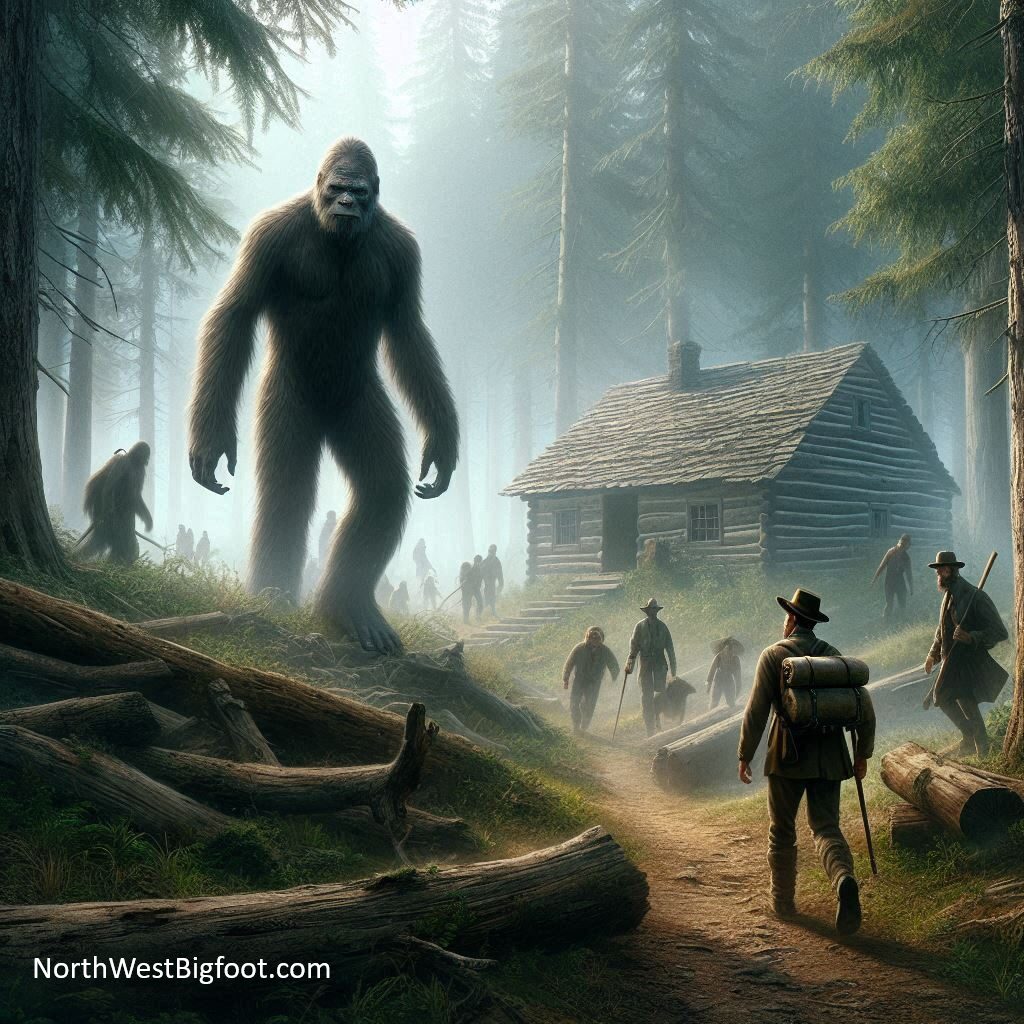
The Bigfoot War of 1855 is a lesser-known legend from American folklore. According to the story, a group of Choctaw warriors and Anglo settlers in what is now LeFlore County, Oklahoma, faced a series of unsettling events. Crops and livestock were mysteriously disappearing, and eventually, women and children began to vanish.
The local tribes and farmers banded together to confront the threat, which they believed was a group of Sasquatch (Bigfoot) responsible for the kidnappings and murders. The confrontation reportedly took place in a clearing where the group discovered a mound of bodies and encountered the Sasquatch. A fierce battle ensued, resulting in casualties on both sides.
While there is no concrete evidence to support this legend, it remains a fascinating piece of folklore that blends Native American history, frontier violence, and cryptozoological mystery.
The legend of the Bigfoot War of 1855 is a fascinating and mysterious tale that has captured the imagination of many over the years. While the story is rooted in folklore and lacks concrete historical evidence, it provides an intriguing glimpse into the cultural fabric of the time.
Origin of the Legend
The story is said to originate from the Choctaw Nation in what is now LeFlore County, Oklahoma. During the mid-19th century, the region was a mixture of Native American tribes, settlers, and an abundance of wilderness. According to the legend, the community began experiencing strange occurrences, such as livestock and crops disappearing, followed by the disappearance of women and children.
The Investigation
A group of Choctaw warriors, along with local settlers, decided to investigate the mysterious happenings. Led by a respected Choctaw leader, they ventured into the dense forests to uncover the source of the troubles. The group eventually discovered evidence pointing to a group of large, hairy creatures—believed to be Sasquatch or Bigfoot—responsible for the disturbances.
The Confrontation
The tale reaches its climax with a dramatic confrontation in a forest clearing. The search party reportedly found a gruesome scene of dismembered bodies and remnants of the missing individuals, suggesting that the Bigfoot creatures were not only responsible for the kidnappings but also for cannibalistic acts.
In response, the Choctaw warriors and settlers banded together to confront the creatures. The ensuing battle was fierce and brutal, with casualties on both sides. The exact details of the battle vary, but it is said that the humans managed to drive away or kill some of the Bigfoot creatures, ending the immediate threat to their community.
Aftermath and Legacy
The Bigfoot War of 1855 has been passed down through generations, primarily through oral tradition and folklore. While there is no archaeological or historical evidence to support the events described, the story has become a part of the region’s cultural heritage. It reflects the tension and fear that frontier communities might have felt, as well as the enduring mystery and allure of the Bigfoot legend.
The tale continues to intrigue and inspire, with some modern-day researchers and enthusiasts exploring the area for clues and evidence of Bigfoot’s existence. Despite its mythical nature, the legend of the Bigfoot War of 1855 remains a compelling story of bravery, mystery, and the unknown.
The Bigfoot War of 1855 – Forgotten History
Sponsored Products…
Your support Helps us pay for this site and conduct Analysis Research, everything helps… besides, you get Cool Bigfoot STUFF…